Power Automate Training Services

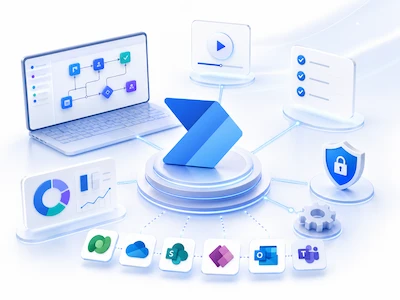
Power Automate is Microsoft’s tool for automating workflows. It helps reduce manual tasks, connect apps, and boost productivity. But many teams struggle to use its full power. Without guidance, adoption is slow, and results are limited. Our experts provide tailored Power Automate training services that make automation simple and effective. Our tailored Power Automate training helps business users, IT administrators, and corporate teams build practical automation skills through hands-on experience and real use cases.

TRUSTED BY

Power Automate Training

Power Automate empowers organizations to reduce manual work, connect Microsoft and third-party apps through available connectors and approved integration patterns. However, many businesses face adoption challenges and underutilized Power Automate’s capabilities. With our expert training, your teams gain hands-on skills to design flows and maximize efficiency.

Why Choose Our Power Automate Training?

Our training programs are designed to go beyond theory and provide your team with the practical skills they need to succeed with Microsoft Power Automate.

Customized Training Paths

Beginners gain confidence by mastering the fundamentals of creating simple automated flows. Also, advanced users learn how to design complex workflows that integrate multiple applications.

Real-World Use Cases and Hands-On Exercises

We believe the best way to learn is by doing. Our sessions incorporate real business scenarios to show how Power Automate can solve common challenges. Participants will build and test their own flows during training.

Flexible Learning Options

We provide multiple formats to meet your needs: on-site workshops for immersive in-person learning, virtual sessions for distributed teams, or hybrid models that combine both approaches.

Post-Training Support & Learning Resources

Our commitment doesn’t end when the training session concludes. Participants can receive step-by-step guides, templates, sample flows, checklists, and recorded sessions where appropriate.

Expert Trainers with Industry Experience

Our instructors bring practical Power Platform implementation experience and, where applicable, Microsoft certification-aligned knowledge across Power Automate, Power Apps, Dataverse, and governance.

Focus on Governance and Security

Automation should not grow without control. We cover environment strategy, maker permissions, connector governance, Data Loss Prevention policies, monitoring, and Power Platform Center of Excellence practices.

Scalable Learning for Growing Teams

Whether you’re training a small department or rolling out Power Automate across the enterprise, our programs are designed to scale. We can onboard new users quickly and help advanced users keep pushing the boundaries of what’s possible.

Integration Across the Microsoft Ecosystem

Power Automate can connect with Microsoft 365, Teams, SharePoint, Dynamics 365, Power BI, Dataverse, and many third-party systems, depending on available connectors, licensing, permissions, and governance policies.

Practical Productivity and ROI-Focused Training

Our training is outcomes-driven. We focus on teaching skills that directly reduce manual effort, cut costs, and speed up processes. This way, we can measure value for your organization.

Book a Power Automate training consultation

We’ll review your team’s skill level, current Microsoft 365 setup, and automation goals, then recommend a practical training plan.

Training Program Overview

Our Power Automate training program provides structured learning paths that address different roles, industries, and skill levels.
Foundations of Power Automate

This course introduces participants to the Power Automate platform and the basics of building simple flows. Learners gain the confidence to automate everyday tasks and understand the core concepts behind workflow automation.
Intermediate Automation Skills

This module helps participants advance their skills by creating more complex flows. Learners practice using conditions and branching logic to design workflows that solve real business challenges.

Power Automate for Business Users

This training focuses on helping non-technical professionals automate their daily work. Participants learn how to connect common apps like Outlook, SharePoint, and Teams to create efficient workflows.
Power Automate for IT/Admins

This course equips technical teams and administrators with the knowledge to manage Power Automate at scale. Participants explore governance and advanced integrations to ensure secure and compliant automation.
Industry-Specific Use Cases

This module demonstrates how different sectors can benefit from automation. Participants review real-world use cases in finance, HR, and operations, such as invoice processing, employee onboarding, and inventory management.

Our Clients

goverment-of-canada
the-jim-pattison-group
ch-groupe
industry section bg 1

Cloud Flows and Workflow Basics

Participants learn how to create automated, instant, and scheduled cloud flows using triggers, actions, conditions, approvals, and notifications.

Connectors and Data Sources

We explain how Power Automate connects to Microsoft and third-party systems using standard and premium connectors, depending on licensing and tenant policies.

Microsoft 365 and Power Platform Integration

Training can include SharePoint, Outlook, Teams, Excel, Forms, Dynamics 365, Dataverse, Power Apps, and other commonly used business tools.

Logic, Expressions, and Flow Design

Learners practice using variables, expressions, loops, conditions, scopes, and branching logic to build more useful and reliable workflows.

Error Handling and Monitoring

Participants learn how to review run history, troubleshoot failed flows, configure alerts, understand retries, and improve flow reliability.

Desktop Flows and RPA Basics

For teams using robotic process automation, training can introduce desktop flows, attended automation, unattended automation, machine setup, and RPA limitations.

Governance and Security

We cover environment strategy, Data Loss Prevention policies, connector control, ownership, documentation, permissions, and monitoring.

Licensing Considerations

Participants learn which scenarios may require premium connectors, Dataverse, AI Builder, RPA licensing, or additional Power Platform capacity.

What Power Automate Training Covers

Power Automate training should give participants both practical maker skills and a clear understanding of how automation works inside Microsoft 365 and the Power Platform. Our training can cover the core topics your team needs to build, manage, and improve workflows safely.

When Power Automate Training Is the Right Fit

Power Automate training is a strong fit for teams that already use Microsoft 365 and want to reduce repetitive work, improve consistency, and automate daily business processes.

Good Fit for Power Automate Training

Power Automate training is ideal for teams using Microsoft 365, SharePoint, Teams, Outlook, Excel, Forms, Dynamics 365, or Dataverse. It works well for automating approvals, notifications, data entry, document routing, reporting tasks, and routine workflow steps.

When a Broader Solution May Be Needed

For highly complex custom applications, large-scale system integration, or advanced API-heavy workflows, Power Automate may need to be combined with Azure Logic Apps, custom APIs, Power Apps, Dataverse, or a custom software solution.

Best Use Cases for Training

Power Automate training is most valuable when teams have real workflows to improve, such as approval processes, task reminders, document management, employee onboarding, customer follow-ups, reporting updates, and cross-system notifications.

Power Automate Limits and Risks

Power Automate is powerful, but successful adoption requires more than learning how to build flows. Teams also need to understand the platform’s limits, licensing requirements, governance controls, and long-term maintenance needs.

Licensing and Premium Features

Some Power Automate capabilities, including premium connectors, Dataverse, AI Builder, attended RPA, unattended RPA, and higher-capacity scenarios, may require additional licensing beyond standard Microsoft 365 plans.

Connector and API Limits

Flows can be affected by connector availability, API limits, throttling, authentication requirements, permissions, and third-party system restrictions.

Ownership and Maintenance

Automations should have clear owners, documentation, monitoring, and backup plans. This helps avoid problems when employees change roles or leave the organization.

Security and Data Protection

Training helps teams understand Data Loss Prevention policies, environment controls, connector classification, and safe data movement across apps.

Business-Critical Workflow Risk

Before automations become business-critical, organizations should plan for testing, error handling, support, and monitoring so workflows remain reliable over time.

Empower your team with the skills to automate smarter.

Your organization can turn repetitive work into reliable, scalable workflows with expert-led Power Automate training. Many companies that pair implementation with structured training report a reduction in repetitive task workload, which frees people to focus on higher-impact work.

Benefits of Power Automate Training

Organizations and professionals often adopt new tools but struggle to unlock their full potential without proper guidance.

For Individuals

Power Automate training equips professionals with practical skills that directly improve daily productivity. Trained users can automate repetitive tasks, save time, and focus on higher-value work.

For Organizations

Organizations benefit from streamlined processes that eliminate inefficiencies and reduce the risk of human error. Trained teams ensure higher ROI from Microsoft 365 by unlocking the full capabilities of Power Automate.

Impact in Numbers

Organizations often see better adoption when Power Automate training is paired with practical use cases and post-training support. Results vary depending on process complexity, licensing, and user adoption.

Who Should Attend?

Power Automate training is designed for a wide range of professionals and teams who want to unlock the full potential of automation within their organizations.

  • Professionals in roles such as operations, finance, HR, and customer service who want to reduce repetitive manual work and streamline daily tasks will benefit significantly. By learning how to design and manage their own automated workflows, business users can eliminate bottlenecks.

  • IT departments often bear the responsibility of managing automation governance and scalability across the organization. Training equips IT teams with the skills to establish proper oversight and enforce best practices.

  • Leaders who oversee projects, departments, or cross-functional teams can leverage training to improve collaboration and workflow efficiency. By understanding how automation fits into broader processes, managers can align resources more effectively.

  • Organizations that are adopting Microsoft 365 or expanding into the Power Platform ecosystem will gain the most value by training their workforce properly. Structured training accelerates adoption and maximizes the return on investment in Microsoft technologies.

Training Delivery Options

Power Automate training is designed to be as flexible as the tool itself, ensuring that organizations and individuals can learn in the format that best suits their schedules.

Organizations that prefer face-to-face interaction can choose on-site sessions delivered at their offices. Instructors work directly with teams to practice on their own systems and address company-specific use cases in real time.
Distributed teams and remote workers can take advantage of live, online training sessions led by experienced Power Platform instructors. This option combines the flexibility of virtual learning with the benefits of real-time guidance and interactive exercises.

Businesses that want the best of both worlds can opt for hybrid delivery, blending on-site sessions with virtual modules. This approach ensures that all employees can access the training and benefit from shared collaboration and consistent learning outcomes.
Participants who prefer to learn at their own speed can access recorded sessions where permitted, step-by-step guides, and digital resources. Self-paced modules provide a flexible way to reinforce knowledge after instructor-led training.

what our clients say about BSuite365?

FAQs

Business professionals, project managers, team leads, IT administrators, and citizen developers should attend. Enterprises adopting Microsoft 365 and the broader Power Platform should also include stakeholders who own process improvement, data, security, and governance so that automation scales safely and sustainably.
Yes. Programs typically span foundations for new makers, intermediate flow design for power users, and advanced topics for IT and developers. Curriculum can map to Microsoft’s role-based certifications such as PL-900 (Fundamentals), PL-200 (Functional Consultant), and PL-400 (Developer) to provide clear learning pathways.
Yes. We can provide self-paced resources, instructor-led sessions, and workshop-style training similar to ‘automation in a day’ formats, depending on your training goals. Many organizations choose a blended approach to balance flexibility with live coaching.
Durations vary. Self-paced modules are micro-learning units that learners can complete at their own pace, one-day workshops provide rapid hands-on exposure, and multi-day courses for advanced users or developers often run over several days.
Programs can provide a certificate of completion for the course. Microsoft role-based certifications require passing official exams such as PL-900, PL-200, PL-500, or PL-400; preparation for these exams can be included in the training.
Yes. Customized tracks can align examples and labs to your processes, data sources, and governance standards. Governance modules can also reflect your compliance requirements.
Most industries benefit, including finance, HR, operations, customer service, and supply chain. Teams that manage approvals, data collection, notifications, document processing, or system integrations gain immediate value.
No. Beginners can start without coding experience because Power Automate provides low-code design with templates and connectors. Familiarity with Microsoft 365, SharePoint, Teams, or Dynamics 365 helps learners accelerate their progress.
Training helps teams identify high-impact automation opportunities, design reliable flows, and implement governance that keeps solutions maintainable. Automated workflows reduce manual effort, increase consistency, and speed up processes across departments.
Courses typically cover cloud flows, triggers, actions, conditions, approvals, desktop flows for RPA, connectors and data integration, error handling, security and compliance, and environment governance. Advanced tracks include solution architecture and lifecycle management.
Yes. Programs often include post-training resources such as recorded sessions, templates, and office hours. Some also include follow-up coaching or governance guidance to ensure sustained adoption.
Yes. One-on-one coaching can reinforce skills, review specific flows, and accelerate project delivery. Coaching can target maker skills for business users, governance for admins, or certification exam preparation.
Pricing depends on delivery mode, duration, audience, and customization. Multi-day instructor-led courses from training partners vary in price, while Microsoft Learn modules are free. Custom corporate programs are quoted after a discovery session.
Yes. Power Automate training integrates naturally with Power Apps, Power BI, Power Pages, and Copilot Studio for end-to-end solutions. Foundational courses such as PL-900 cover the entire Power Platform.
Governance patterns can be learned through the Power Platform Center of Excellence Starter Kit and Data Loss Prevention policies. Training can incorporate these to ensure responsible, scalable automation.
Training usually covers cloud flows for SaaS automation and desktop flows for robotic process automation, including scenarios with attended and unattended execution. We also explain the difference between attended and unattended desktop automation, including licensing, machine setup, run permissions, and monitoring considerations.
Instructor-led workshops provide guided, hands-on labs and live Q&A, while self-paced modules offer interactive lessons that learners can complete independently. Many organizations use both for balanced learning.
Learners often pursue PL-900 to validate fundamentals, PL-200 to demonstrate consulting and process automation expertise, and PL-400 to prove developer-level capabilities.
Training addresses environment strategy, connector governance, and data loss prevention policies so that automations respect data boundaries and regulatory requirements.
Attendees can continue with Microsoft Learn learning paths, exam study guides, and official courseware for deeper specialization and certification preparation.
Organizations can begin by selecting a delivery mode (on-site, virtual, hybrid, or self-paced), identifying priority use cases, and scheduling a workshop or tailored curriculum aligned to their goals.

Contact us

Contact us today at +1 (888) 359-1841 and speak with our specialist.